
Insurance Programs Built For Full-Service Damage Restoration Firms
Your company is not a generic contractor. You manage water, fire, smoke, mold, contents, and environmental work under one brand, often on the same loss. Your insurance program has to keep up with that reality.
Restore Insure focuses on full-service damage restoration firms that live between emergency response and long-term recovery. We help you coordinate general liability, professional liability, pollution, and equipment coverage so your crews can move quickly while your protection stays organized and clear. Many damage restoration companies use this approach to keep coverage aligned as projects shift.
Our work centers on restoration contractor insurance and business insurance for restorers. For qualified accounts, we aim to issue policies within about 24 hours of receiving complete information, and we work to submit claim notices within about 24 hours of hearing from the insured so you are not waiting for the next move.
How Full-Service Damage Restoration Companies Really Operate
A single project can move from emergency extraction to demolition, drying, containment, remediation, deodorization, and contents handling in rapid sequence. Service lines overlap, crews rotate in and out, and job conditions change by the hour.
Your supervisors juggle moisture maps, photos, estimates, carrier notes, and property owner expectations. Protocols shift as new information arrives. Subs come and go. Equipment stages in driveways, garages, basements, and temporary storage. Every one of those moves carries risk.
Generic contractor insurance often ignores the details that decide claim outcomes: how you documented drying decisions, how you contained contaminants, how you handled smoke residues, and how you tracked contents from site to warehouse. When those details are missing from the insurance conversation, you hold more risk than you realize.
Restore Insure brings those realities into the center of your program design so you can see how each coverage line supports the way your restoration business actually runs.
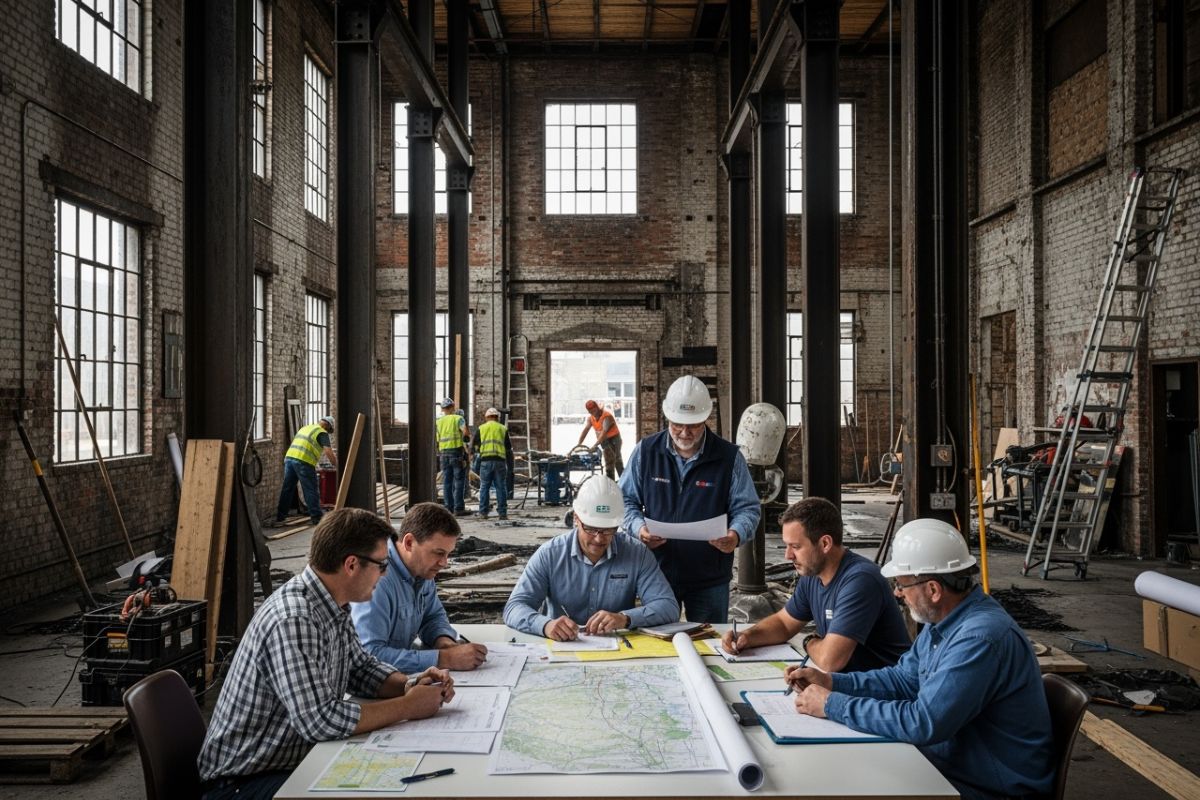
Coverage Designed Around Full-Service Damage Restoration
A strong program does more than check boxes for contracts. It connects each line of coverage to the way your teams perform water, fire, mold, contents, and environmental work under one roof.
For damage restoration companies that run multiple service lines under one brand, this kind of coverage mapping helps keep the full program organized and easy to manage.
General Liability
Jobsite slip-and-fall incidents, accidental property damage while tearing out wet materials, or overspray from cleaning solutions can all trigger liability claims. For busy restoration crews moving through wet, cluttered spaces, these risks are constant.
A general liability structure tuned to restoration projects supports the way you stage equipment, control access, and protect both occupants and neighboring areas while work is in progress.
Professional Liability / Errors and Omissions
Drying protocols, demolition decisions, scope recommendations, and documentation habits all shape how a claim settles. When a property owner or carrier challenges your judgment, they are questioning professional decisions, not just physical work.
Professional liability coverage is built to respond when someone alleges that your advice, documentation, or oversight caused financial loss, even if your crews followed the work plan exactly as written.
Contractors Pollution Liability
Category 3 water, mold growth, soot and smoke residues, asbestos-containing materials, and other contaminants are part of your daily vocabulary. They also sit at the center of some of the most expensive and contentious claims in the industry.
Contractors pollution liability connects coverage to the work you do inside containment, under negative air, and in post-fire environments where questions about health and safety often come later.
Inland Marine, Tools, and Equipment
Your inventory of air movers, dehumidifiers, air scrubbers, meters, and specialty tools moves from trucks to job sites to warehouses every day. Equipment sits in driveways overnight, in lobbies during business hours, and in temporary storage when projects stall.
A well-structured inland marine schedule supports the way you actually deploy equipment, including rented units and contents in transit, so a theft or damage incident does not stall your entire operation.
Who This Damage Restoration Program Is Built For
This page speaks directly to owners, general managers, and senior leaders who run full-service damage restoration companies. You coordinate multiple crews, service lines, and territories, and you need an insurance partner that understands that complexity.
Whether your team self-performs water, fire, smoke, mold, and contents work or manages a network of specialized subs, your brand stands behind every decision and every work order. The program outlined here is built for firms that carry that responsibility on every loss.
If you recognize your operation in these descriptions, you are in the right place, even if your exact label varies between restoration, mitigation, environmental services, or recovery.
Examples Of Companies This Fits
- Single-location restoration firms expanding into neighboring markets and larger commercial projects.
- Franchise operators managing several territories with shared equipment fleets and centralized leadership.
- Regional brands adding environmental clean-up or reconstruction services alongside mitigation work.
- Established companies tightening documentation, carrier relationships, and TPA expectations to win better work.
- Teams moving from basic contractor policies to a coordinated restoration-first insurance strategy.
Real Damage Restoration Scenarios Your Insurance Program Should Anticipate
The right structure shows its value when something goes wrong. These brief stories highlight how a restoration-first program can support your firm when the pressure is high.
When A Drying Decision Is Challenged
A commercial client questions why drywall was removed instead of dried in place. An adjuster claims the demolition went beyond protocol and refuses part of the invoice. The dispute is not just about labor; it is about your professional judgment and documentation.
With aligned general liability and professional liability, you are prepared to show how readings, photos, and notes supported the decision, and you have coverage designed for the financial impact if the disagreement escalates.
When Fire Work Reveals Unexpected Contamination
During a smoke and soot cleanup, crews uncover previously unknown contaminants and must change the scope mid-project. The delay, added cost, and health concerns trigger tension between the property owner, carrier, and your team.
A program that connects contractors pollution liability with your protocols gives you a path for handling both the environmental questions and the financial exposure without scrambling to see what is actually covered.
When A Contents Pack-Out Is Questioned
Contents are inventoried, packed, and moved off site. Weeks later, the owner disputes the condition of several high-value items and claims they were damaged or lost in your custody.
With a program that addresses chain of custody, documentation, and inland marine exposures, you can show how your process works, respond to the claim, and keep your reputation with both the owner and carrier intact.
Three Steps To A Program That Matches Your Restoration Operation
Restore Insure makes it straightforward for damage restoration leaders to move from a patchwork of policies to a clear, coordinated structure.
Map Your Services And Contracts
Together we document how your company actually works: lines of service, contract types, TPAs and carriers, subs, territories, and growth plans. This gives a full picture of where risk lives in your operation.
Align Coverage With Real Exposures
We connect general liability, professional liability, pollution, and inland marine to each phase of your jobs, from first notice of loss through reconstruction. The result is a program that matches the work your crews perform every day.
Adjust As You Grow Markets And Services
As you enter new regions, add service lines, or scale franchise territories, we revisit the structure so your insurance keeps pace with your ambitions instead of lagging behind your growth.
Damage Restoration Insurance FAQs
These answers address common questions from full-service damage restoration firms evaluating a new insurance program.
Do we need to be a certain size or revenue to work with Restore Insure?
No specific size is required. We focus on fit. If your company performs meaningful damage restoration work and wants a program aligned with that work, we can evaluate options together. Smaller firms gain structure early, and larger firms gain clarity and coordination.
How do you handle multi-location or franchise damage restoration operations?
We look at how your locations or territories actually function: shared equipment, centralized leadership, local autonomy, and contract structures. The goal is to build a program that protects the entire brand while respecting how individual branches or franchisees operate day to day.
What if our jobs include both mitigation and reconstruction?
Many damage restoration projects move from emergency response through reconstruction. We account for both sides of the work when structuring your coverage, including how you document handoffs between mitigation and rebuild crews and how contracts describe your responsibilities at each stage.
How do carriers view mold, Category 3 water, and other high-concern exposures?
These exposures are closely watched, but clear protocols, strong documentation, and the right blend of general liability and pollution coverage can position your firm well. We help you understand how carriers evaluate these risks so you can align field practice and insurance terms.
What happens if we currently have a generic contractor program?
Many clients start there. We review your existing policies, identify gaps that matter for damage restoration work, and outline a path from your current setup to a restoration-first structure. You see the differences before making changes, so every adjustment is intentional.
How quickly can we move from conversation to a new program?
Timelines vary by size and complexity, but once we complete the discovery work, we move with purpose. Our objective is simple: help you secure the right structure as soon as practical without rushing past important details.
Make Damage Restoration The Center Of Your Insurance Strategy
Restore Insure is built for full-service damage restoration companies that refuse to be treated as a generic construction category. We translate the realities of mitigation, remediation, contents, and environmental work into a clear insurance strategy.
With a restoration-first program, you walk into carrier and TPA conversations with confidence, reduce surprises at claim time, and position your firm to pursue larger, more specialized projects without guessing how risk is handled.