
Insurance Built Around Real Water Damage Restoration Work
Your crews are first in after a water loss. You walk into soaked hallways, dark basements, and flooded offices and make fast calls about safety, moisture, demolition, and contents while everyone around you wants certainty.
Every decision you make on a water job carries risk. You are moving hoses and cords through tight spaces, placing air movers and dehumidifiers in high-traffic areas, and documenting readings that drive payment, scope, and future disputes.
RestoreInsure focuses on restoration contractor insurance and business insurance for restorers. For qualified accounts, we aim to issue policies within about 24 hours of receiving complete information and we work to submit claim notices within about 24 hours of hearing from the insured.
How Water Damage Firms Really Operate Day To Day
Your business is built on fast response, field judgment, and documentation that holds up when a loss is reviewed weeks or months later.
Most calls do not arrive on a calm weekday morning. They come at night, on weekends, or during storms when water is still pouring in. You are stopping active damage, triaging what can be dried, and deciding what must be removed before conditions worsen.
On every project, your team is mapping moisture, cutting access, managing negative air, and coordinating with owners, property managers, and adjusters. Around you are slick floors, trip hazards from hoses and cords, and stressed occupants moving through your work area.
Disagreements over water category, scope, and timing are common. Alleged over-drying, under-drying, or late mold can turn your job files into evidence. Generic contractor insurance rarely considers that mix of emergency response, tight spaces packed with equipment, and the documentation trail you are expected to keep.
This is why a water damage restoration insurance program has to be specific. It should reflect how you take calls, dispatch crews, set up containment, document readings, and close jobs in the real world.
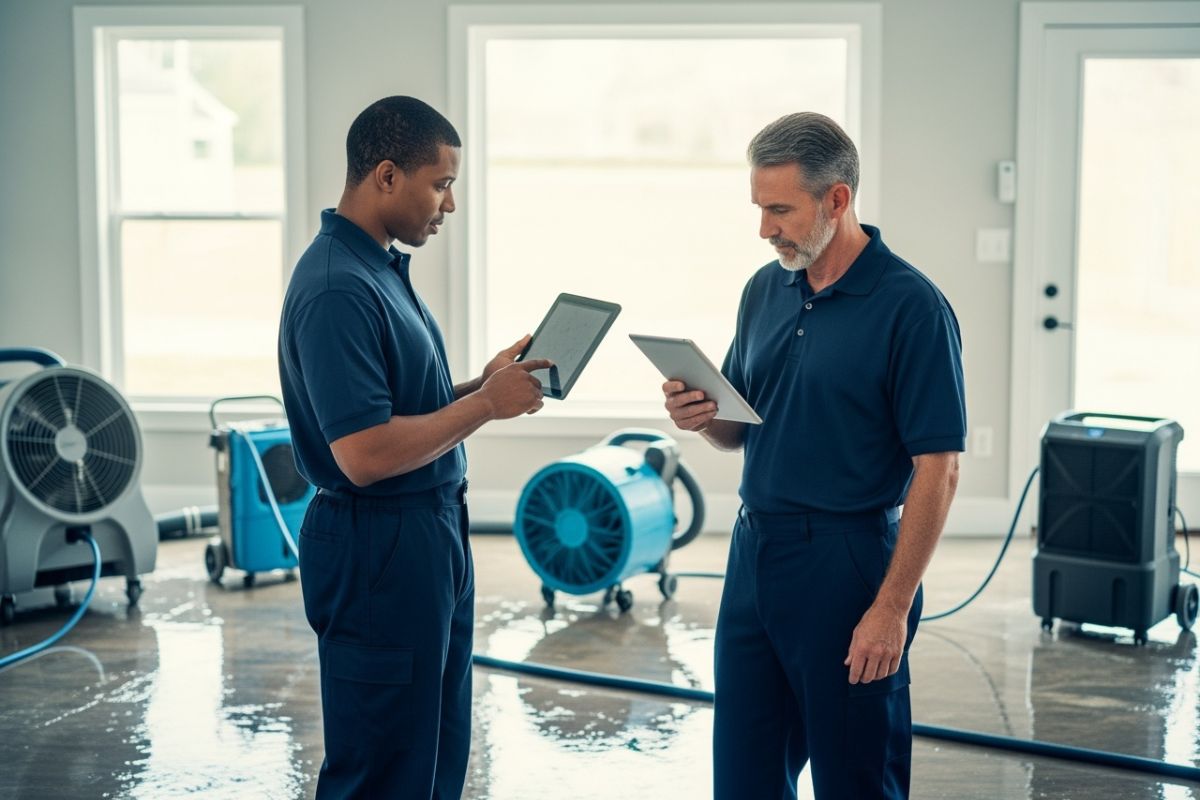
Coverage Built Around Water Damage Restoration Work
The right structure connects field risk to specific lines of coverage so you know which policy is expected to respond when something goes wrong.
General Liability For Wet, Active Job Sites
General liability responds when there is bodily injury or property damage tied to your operations. In water work, that might be a resident who slips on wet flooring near your hoses, damage to unaffected rooms during demolition, or a claim that furniture or finishes were harmed while you were moving equipment.
A program tuned to water damage restoration looks at how your crews set up containment, route cords, and stage equipment in occupied homes, multi-family buildings, and commercial spaces.
Learn more about General LiabilityProfessional Liability For Scope And Documentation
Professional liability (or errors and omissions) supports you when the dispute is about your judgment rather than a simple accident. Water jobs generate questions about how you classified the category, how long you dried, where you cut, and how you documented conditions.
This coverage is designed for scenarios where someone later alleges that your recommendations or records were incomplete, inaccurate, or contributed to additional damage or delay.
Learn more about Professional LiabilityContractors Pollution Liability For Category 3 And Sewage
Many policies treat contaminated water, sewage, and resulting microbial growth as pollutants. When you work on Category 3 losses, crawlspaces, or long-duration wet conditions, allegations about health, odors, or mold can move quickly into pollution territory.
Contractors pollution liability is built to address those allegations so every Category 3, sewage, or contamination-heavy job is not quietly putting your balance sheet at risk.
Learn more about Contractors Pollution LiabilityInland Marine And Equipment For Gear That Never Sits Still
Your business runs on air movers, dehumidifiers, extractors, meters, and temporary power. Those assets are in trucks, on trailers, in hallways, and spread across floors on large commercial jobs.
Inland marine coverage is structured to follow that equipment from job to job, addressing theft, damage in transit, and losses that happen while gear is deployed in the field.
Learn more about Inland Marine And EquipmentWho This Water Damage Program Is Built For
If water is driving most of your calls, this structure is built with your world in mind.
This page is for owners, general managers, mitigation leaders, and regional managers who live in the water lane. You send crews into homes, offices, schools, and facilities where water has already changed everything.
Your teams handle emergency extraction, structural drying, controlled demolition, and the day-to-day communication that keeps property owners and carriers aligned. You may be part of a franchise system, a growing independent, or a regional brand with multiple branches, but the core service is the same: stop damage, stabilize the building, and document what you did.
Property owners and adjusters lean heavily on your crews to call the category correctly, prevent secondary damage, and protect health while keeping schedules and budgets under control. When your work is that central to the claim, your insurance program has to keep pace.
- Mitigation-only firms focused on extraction, drying, and monitoring
- Full-service restoration companies where water drives most initial losses
- After-hours emergency response teams serving residential and commercial clients
- Operations handling large commercial, multi-family, or campus-style water losses
- Water-focused divisions inside larger restoration or construction brands
Real Water Loss Scenarios Your Insurance Should Be Ready For
A well-structured program shows up in specific moments, not just on renewal paperwork.
Slip On Wet Flooring During Mitigation
Your team responds to an after-hours sprinkler loss in a commercial building. Hoses run through a corridor, air movers line the walls, and an employee arrives to check on their office. They slip on wet flooring near your setup and are injured.
With the right general liability and risk controls in place, you can document how the area was marked, how access was managed, and how your policy is structured to respond to incidents that happen while you work.
Drying Job Challenged Months Later
A residential water loss is dried, documented, and signed off. Months later, mold is found in a cavity that was not fully opened. Now the file is being reviewed by the carrier, the owner, and possibly legal counsel.
A coordinated professional liability and pollution structure can support your position, with moisture logs, photos, and job notes aligned to coverages that anticipate this kind of documentation dispute.
Equipment Lost On A Large Commercial Loss
A large water loss spans multiple floors and several hundred pieces of equipment. At the end of the project, a portion of your air movers and dehumidifiers are missing or damaged beyond repair.
An inland marine schedule that reflects your real fleet and deployment patterns helps you recover from that loss, rather than absorbing it as an unfortunate cost of doing business.
Three Steps To Align Insurance With Your Water Workflows
The goal is simple: a program that matches the way your teams actually handle water losses in the field.
Map Your Water Workflows
Start by walking through how you receive calls, dispatch crews, classify water category, document moisture, and close jobs. We look at your real routes, job types, and documentation habits so coverage can be built around what is happening on every project.
Align Coverage With Field Risk
Next, we connect those workflows to general liability, professional liability, pollution, and equipment coverage. The focus is on slip and fall exposures, documentation disputes, handling of contaminated water, and how your gear moves from job to job.
Review As Your Volume Grows
As you add trucks, crews, service territory, and larger commercial projects, we revisit limits, deductibles, and structures. Your program evolves with your water work instead of falling behind and creating gaps.
Water Damage Restoration Insurance FAQs
Questions from water-focused firms often fall into a few clear themes. Here are some of the most common.
Can you work with a water-focused division inside a larger restoration brand?
Yes. Many firms have dedicated mitigation teams inside a broader restoration or construction business. We look at how that division operates, how jobs are assigned, and how contracts are written so coverage can be structured around the water work while still fitting inside your overall program.
How do equipment-heavy operations and temporary power affect coverage?
Equipment density and temporary power matter. We consider where your gear is stored, how it moves, and how often it is deployed on larger projects. That informs how inland marine, general liability, and any additional protections are structured for trailers, generators, cords, and distribution panels.
What happens when there is a dispute about water category or drying scope?
Disputes over category, scope, and timing are exactly where professional liability and documentation practices become critical. We review how you classify losses, how you log readings, and how you communicate recommendations so your coverage is designed for that kind of scrutiny.
How do Category 3 and sewage jobs interact with pollution coverage?
Many Category 3 and sewage projects raise pollution and health questions, even when you follow standards. Contractors pollution liability is designed to address those allegations. We help you understand where your current policy stands and what changes may be needed as your mix of work shifts.
What changes when we move from residential to larger commercial or multi-family losses?
As job size grows, so do equipment counts, access issues, and the number of stakeholders. Limit structures, documentation expectations, and contractual requirements usually change as well. We look at your pipeline of work and help you plan for growing volume and job complexity.
How is this different from a generic contractor policy?
Generic policies are often written for trades that do not manage active water, heavy equipment in occupied spaces, or detailed moisture logs. A mitigation-focused structure starts with your water workflows and builds coverage around the specific exposures and disputes you face on those jobs.
Turn Your Water Workflows Into A Stronger Insurance Position
Water damage restoration is more than another trade. It is emergency response, risk management, and careful documentation wrapped into one service line. When that work is backed by a program built for mitigation, you face reviews and disputes from a stronger position.
RestoreInsure helps you reduce surprises when jobs are questioned, stay aligned with carriers and TPAs, and step confidently into higher-value water work and larger losses knowing your coverage was designed with those projects in mind.